WIZM-QRE1113
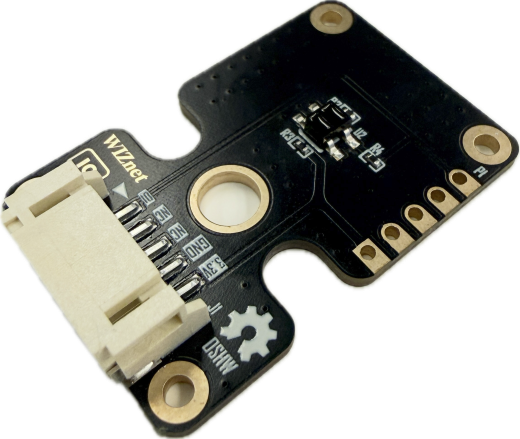
WIZM-QRE1113 is a reflective object sensor module based on the QRE1113 miniature optical sensor. Designed for proximity detection, surface sensing, and automated line tracking, it integrates an infrared emitting diode and an NPN phototransistor. Operating at 3.3V, it outputs a digital GPIO signal (DO) corresponding to the presence or absence of a reflective surface.
 Buy now
The WIZM-QRE1113 is a subminiature reflective object sensor breakout board equipped with the QRE1113 infrared sensor. The module integrates an onboard signal conditioning and biasing circuit, enabling a low-power microcontroller GPIO pin to reliably monitor surface reflections without requiring an external ADC. Dual connector breakouts (a standard 2.54mm pitch header and a keyed JST horizontal connector) make it ideal for line-following robots, optical edge detection, object presence sensing, and rotational speed counting.
Features
Miniature Reflective Sensor: Built around the subminiature QRE1113 sensor incorporating an IR emitter and phototransistor.
Direct Digital GPIO Output: The
DOpin provides a direct digital logic signal indicating surface reflectivity without analog-to-digital conversion.Plug-and-Play 3.3V Logic: Compatible directly with 3.3V microcontroller logic levels and expansion carrier boards.
Dual Connection Options: Supports standard 2.54mm pitch through-hole headers (P1) alongside a keyed horizontal lock connector (J1).
Standardized Mounting: Four perimeter mounting holes plus a center pass-through hole for easy mounting onto panels and chassis.
Specifications
Parameter |
Value |
|---|---|
Model (P/N) |
WIZM-QRE1113 |
Function |
Reflective Object Sensor |
Active Component (IC) |
QRE1113 |
Interface (I/F) |
GPIO |
Revision |
1.0 |
Operating Voltage (VCC) |
3.3V DC |
Connector Pitch |
Standard 2.54mm (P1) / Keyed Horizontal JST (J1) |
Pin Count |
5 Pins ( |
Pinout & Hardware Overview
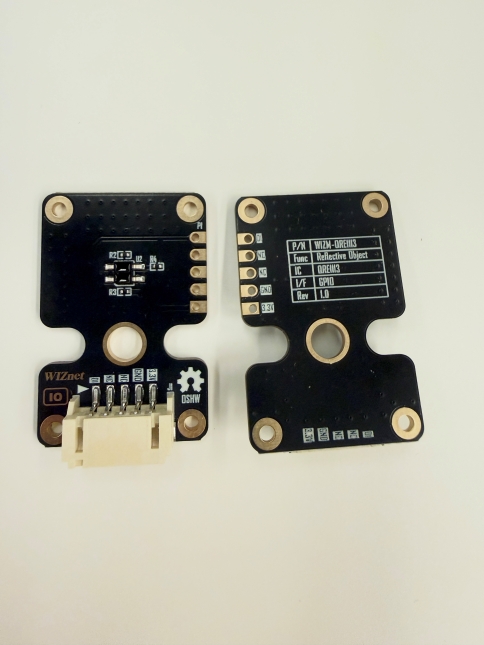
The module provides two parallel pin interfaces: a standard 5-pin 2.54mm pitch through-hole header (P1) and a 5-pin horizontal keyed connector (J1).
Pin |
Type |
Description |
|---|---|---|
D1 |
Output |
Digital Output signal (Reflective object / line detection) |
NC |
— |
Not Connected |
NC |
— |
Not Connected |
GND |
Power |
Ground supply reference |
3.3V |
Power |
3.3V DC Power Supply |
Top View & Bottom View
Platforms Supported
MicroPython |
|---|
|
Getting Started
Materials Required (excluding reflective module)
W55MH32L-Application-KIT
5-pin female-to-female JST PH-Style Cable
USB Type-C Cable
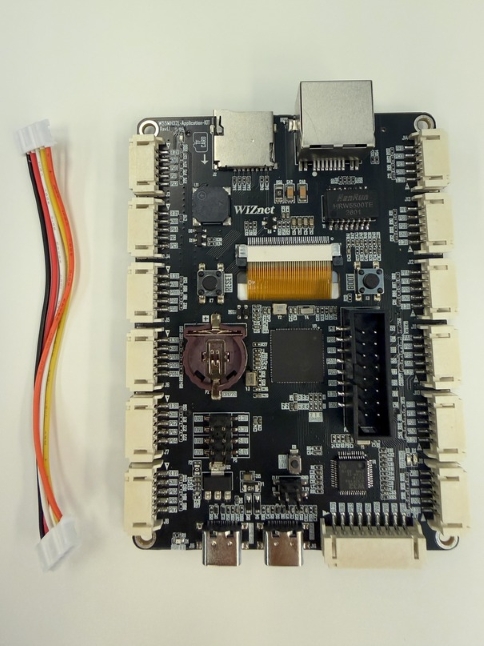
Hardware Connection
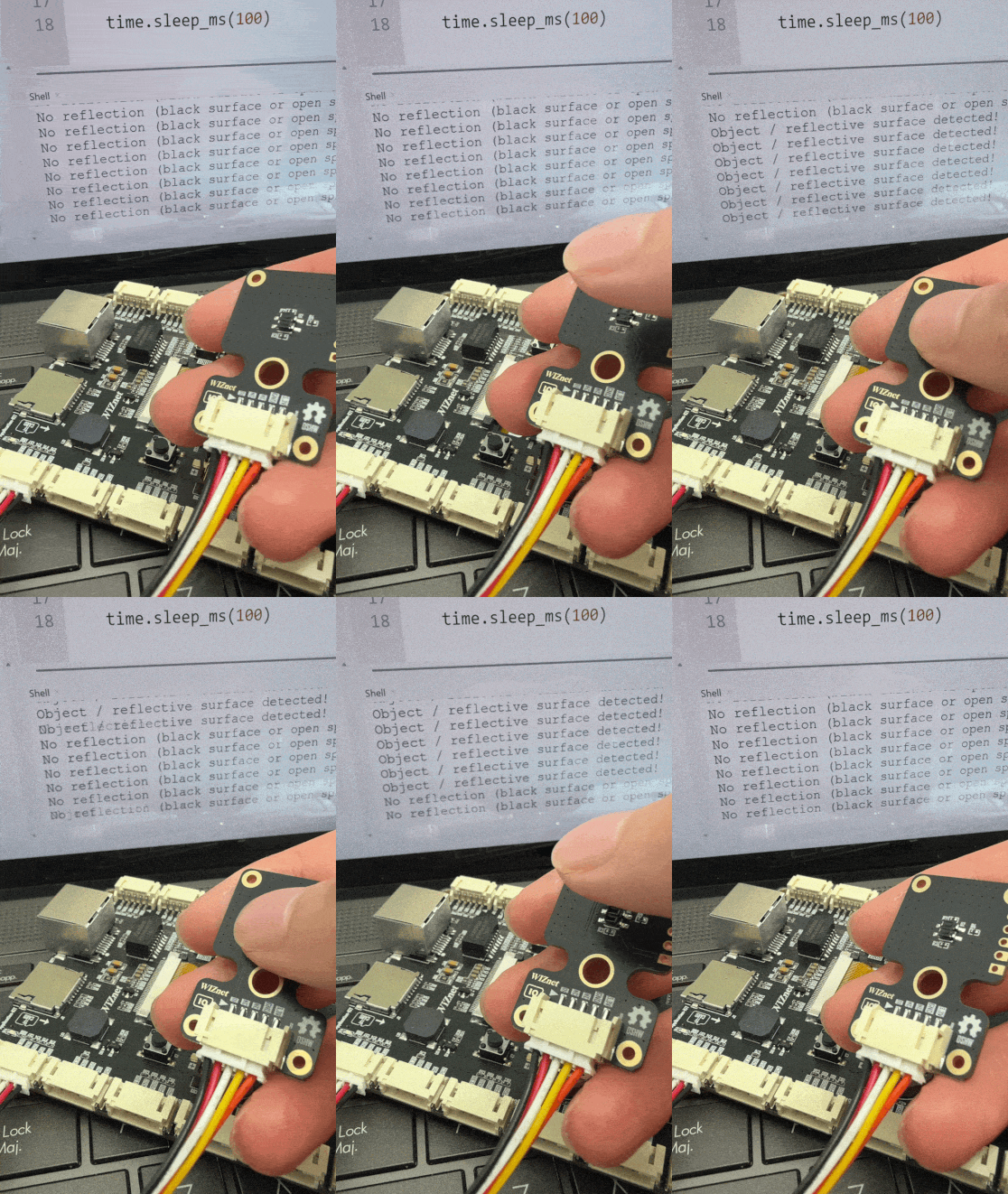
Connect the WIZM-QRE1113L to an ADC-enabled connector (e.g., J3) on the W55MH32L-Application-KIT using the 5-pin JST cable.
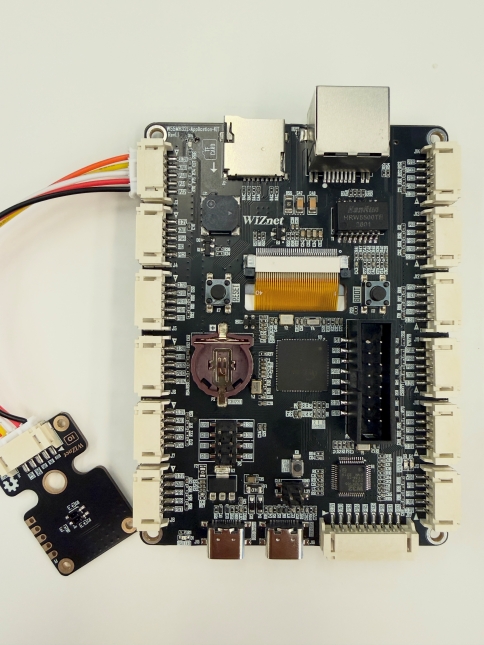
Then use a USB Type-C cable to connect the WIZ-LINK USB Type-C port on the application kit to your PC.
Sample Code Demo
Software
We will be using Thonny IDE to run MicroPython code on the board.
Open Thonny IDE on your PC.
Select the appropriate COM port corresponding to your connected board.
Set the interpreter to MicroPython (generic).
Refer to the WIZnet documentation page for detailed environment setup instructions.
MicroPython
from machine import Pin
import time

# Initialize DO pin as digital input
# Note: Update the pin assignment to match the pin connected to DO on your carrier board connector.
sensor = Pin("PG5", Pin.IN)

print("Starting QRE1113 Reflective Object Sensor monitoring...")

while True:
    val = sensor.value()

    if val == 0:
        print("Object / reflective surface detected!")
    else:
        print("No reflection (black surface or open space)")

    time.sleep_ms(100)